You can remove standing water from your yard after rain in Port Charlotte FL by first checking whether the water is still rising, then using a pump, a trench, or a wet/dry vacuum to move it away from your foundation. If the water is deeper than 3 inches, sits within 10 feet of your house, or has been there more than 24 hours, call a professional - that's when mosquito breeding, foundation seepage, and septic issues start. This guide walks through why yards flood here, the fastest safe ways to drain them, and when to bring in help.
Port Charlotte sits on flat, sandy ground with a high water table, and our summer storm season dumps 7 to 9 inches of rain in a single afternoon often enough that flooded yards are a normal part of living here. The good news: most yard flooding is fixable in a few hours if you act early.
Why Your Yard Floods After Rain in Port Charlotte
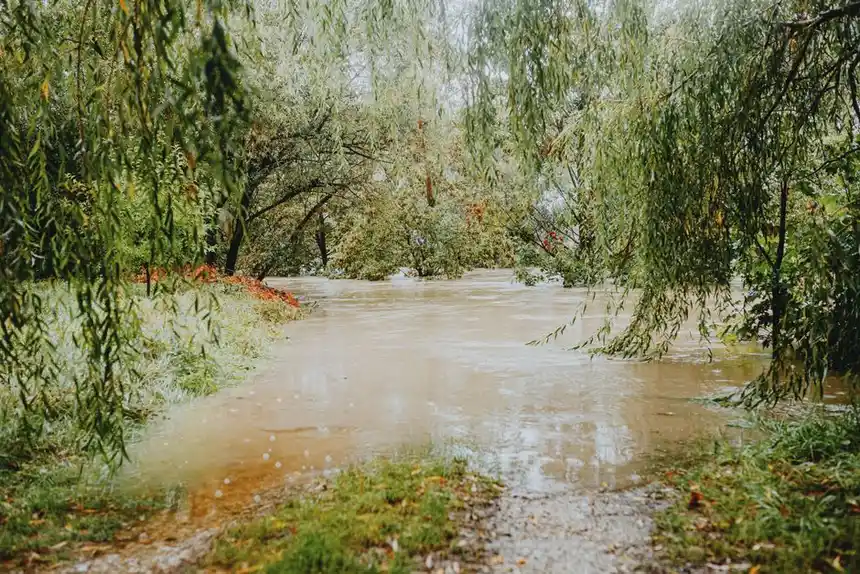
Port Charlotte yards flood after rain because the soil is already saturated, the water table is high, and most lots drain toward a single low spot with nowhere to go. Charlotte County's flat topography means water doesn't run off the way it does in hilly areas - it pools.
Here's what we see on calls across the area:
- Sandy soil with a shallow water table. After a week of afternoon storms, the ground can't absorb another drop. Water sits on top.
- Clogged or undersized swales. Many Port Charlotte neighborhoods were built with shallow drainage swales between lots. When they fill with grass clippings and sediment, they stop working.
- Blocked French drains and yard drains. A 4-inch pop-up drain that hasn't been flushed in two years is usually packed with roots and sand.
- Gutter downspouts discharging 2 feet from the foundation. That's 600 to 1,200 gallons of water per 1,000 square feet of roof during a 2-inch storm, dumped right where you don't want it.
- New construction grading. Lots in newer sections of North Port and Port Charlotte sometimes settle in the first two years, creating a low corner that holds water.
If you've noticed this pattern repeating every storm season, it's worth having someone look at your drainage before the next system moves in. We handle Emergency Water Extraction Port Charlotte FL calls year-round, and about a third of them start as "my yard keeps flooding and I don't know why."
How to Remove Standing Water From Your Yard After Rain in Port Charlotte FL
How to remove standing water from your yard after rain in Port Charlotte FL comes down to three moves: stop more water from entering, give the existing water somewhere to go, and move it faster than gravity alone will. Do them in that order.
Step 1: Stop adding water to the problem
Before you touch a pump, cut off the source. Disconnect downspouts from any buried line that runs toward the flooded area, and redirect them at least 6 feet from the foundation. If you have a pool, check that it isn't overflowing into the yard. If your irrigation system ran this morning, shut it off for 48 hours.
Step 2: Find the low spot and give it an exit
Walk the yard and find where the water is deepest. That's your target. You have three realistic options:
- Hand trench. A shallow 4- to 6-inch trench from the low spot to a swale, ditch, or street curb can move hundreds of gallons an hour on sandy soil. Dig it on a slight downhill grade - even 1 inch of drop per 10 feet helps.
- Utility pump. A 1/3 HP submersible pump with a garden hose discharge moves roughly 1,500 to 2,500 gallons per hour. That's enough to clear a typical 20x30 foot puddle in 2 to 4 hours.
- Wet/dry vacuum. Good for small pockets under 2 inches deep near a door or garage slab. Not practical for a full yard.
Step 3: Move the water, don't just spread it
Discharge to a curb, storm drain, or planted area at least 15 feet from any structure. Never pump into a neighbor's yard - in Charlotte County that's a quick way to turn a small problem into a complaint. If your yard drains to a swale, pump into the swale, not onto the lawn.
For larger properties or when the water is already touching the slab, we use truck-mounted extraction equipment that moves far more volume than a homeowner pump. That's the same gear we run for exterior water extraction Port Charlotte FL calls after tropical systems.
Should You Pump Water Out of Your Yard in Port Charlotte?
Yes, you should pump water out of your yard in Port Charlotte if it's within 10 feet of your foundation, deeper than 3 inches, or has been standing more than 24 hours. Below those thresholds, most yards drain on their own within a day or two once the rain stops.
Here's the decision in plain terms:
- Pump now: water touching the slab, water over a septic drain field, water within 5 feet of a crawl space vent, or any water that smells like sewage.
- Wait and watch: a shallow puddle in the back corner of a large lot, no structures nearby, rain forecast to stop within a few hours.
- Never pump: if the water is rising fast and you don't know where it's coming from - that could be a broken main or a surcharging storm system, and pumping can make it worse.
One more thing: if your yard floods every time we get more than an inch of rain, pumping is a bandage. The real fix is drainage - regrading, clearing swales, or installing a proper French drain. We see this constantly in older sections of Emergency Water Extraction in Punta Gorda, where lots were graded decades ago and have settled since.
Does Standing Water in Your Yard Cause Problems in Port Charlotte FL?
Standing water in your yard in Port Charlotte FL causes real problems within 24 to 48 hours: mosquito breeding, lawn fungus, foundation seepage, and - in the worst cases - septic system failure. It's not just an eyesore.
What actually happens when water sits:
- Mosquitoes. Aedes aegypti and Culex mosquitoes breed in as little as a bottle cap of water. In 80°F Florida heat, the cycle from egg to biting adult takes 7 to 10 days. A flooded yard is a nursery.
- Lawn damage. St. Augustine grass - the most common turf here - starts dying after 3 to 4 days of submersion. Brown patch fungus shows up even faster.
- Foundation and slab issues. Port Charlotte homes are mostly slab-on-grade. Water that sits against the slab for a week finds its way under it, and that's when you start seeing cracks in tile and sticking doors.
- Septic systems. If your drain field is saturated, waste has nowhere to go. That's a $10,000 to $25,000 problem in 2026 dollars.
- Crawl space moisture. Homes with crawl spaces pull that ground moisture up into the structure. We handle crawl space water removal Port Charlotte FL calls every wet season for exactly this reason.
If the water has been there more than 48 hours and you can smell it from the driveway, don't wait for it to drain. Call someone.
Common Mistakes Homeowners Make With a Flooded Yard
The most common mistake we see is homeowners pumping water toward the house instead of away from it - usually because the nearest storm drain happens to be on the wrong side. Always check the slope before you run a hose.
Other mistakes worth avoiding:
- Pumping onto a neighbor's property. It's rude, and in some HOAs it's a fine.
- Using an extension cord in standing water. A 120-volt pump in a puddle is a genuine electrocution risk. Plug into a GFCI outlet, and keep the connection at least 10 feet from the water's edge.
- Ignoring the source. If the water is coming up from below - not draining down from above - you may have a broken irrigation line, a failed septic field, or a rising water table. Pumping won't fix any of those.
- Waiting for it to "drain on its own." On saturated Port Charlotte soil, that can take 5 to 7 days. By then the damage is done.
- Walking through it barefoot. Standing water after a storm can carry bacteria from overflowing septic systems, lawn chemicals, and sharp debris. Wear boots.
When to Call a Professional for Yard Water Removal
Call a professional for yard water removal in Port Charlotte when the water is within 10 feet of your home, deeper than 3 inches, has been standing more than 24 hours, or smells like sewage. Those four conditions are the ones that turn a nuisance into a claim.
We bring truck-mounted pumps, discharge hose, and moisture meters. We don't just move the water - we check the slab, the crawl space, and any exterior wall the water was touching to make sure nothing wicked inside. If it did, we dry it before mold has a chance to set in. That's what structural drying services Port Charlotte FL is for, and it's usually a one-day job when we catch it early.
We also handle the bigger version of this problem - the kind that comes with a named storm. If your yard flooded after a hurricane or tropical system, the water is often contaminated with debris and runoff, and that changes how it has to be removed. That's what our emergency flood water removal Port Charlotte FL crews train for.
Frequently Asked Questions
How do I remove standing water from my yard in Port Charlotte FL?
Start by redirecting downspouts and shutting off irrigation. Then dig a shallow trench from the low spot to a swale or curb, or use a 1/3 HP submersible pump to move 1,500 to 2,500 gallons per hour. If the water is within 10 feet of your house or deeper than 3 inches, call a pro instead.
Why is my yard flooded after rain in Port Charlotte?
Port Charlotte's flat, sandy soil and high water table mean water has nowhere to go after heavy rain. Add clogged swales, blocked French drains, and downspouts discharging near the foundation, and you get a yard that pools every storm season. It's a drainage problem, not bad luck.
Should I pump water out of my yard in Port Charlotte?
Yes, if the water is within 10 feet of your foundation, deeper than 3 inches, or has been sitting more than 24 hours. Below those thresholds, most yards drain on their own in 1 to 2 days. Never pump if the water is rising fast - that could be a main break.
Does standing water in yard cause problems Port Charlotte FL?
Yes. Mosquitoes breed in 7 to 10 days, St. Augustine grass dies after 3 to 4 days submerged, and slab foundations can wick water within a week. Septic drain fields can fail entirely, which runs $10,000 to $25,000 to replace in 2026. Don't let it sit.
What's the best way to remove standing water from yard Port Charlotte?
For small puddles, a hand trench to a swale works fine. For anything larger, a submersible pump is the fastest homeowner option. For water near the house or after a storm, professional truck-mounted extraction is faster and safer - usually cleared in 2 to 4 hours.
Get Help With Emergency Water Extraction in Port Charlotte
If your yard is flooded and the water is creeping toward your slab, we can be there today. We pump it out, check the structure, and dry anything that got wet - before it becomes a mold job.
Call Port Charlotte Water Removal at 1111-0987-599 and we'll get your yard back to dry ground.