Shut off the water at the main valve, kill power to any wet rooms at the breaker, and get extraction equipment running within the first hour. That sequence - water off, power off, water out - is what limits damage after a flood in Port Charlotte, and it is the same order our crews follow when they walk through the door. What you do in the next 60 minutes decides whether you are looking at a few days of drying or a full rebuild. Below is the exact playbook we use, plus the mistakes that turn a manageable leak into a $20,000 insurance claim.
What to do first when water floods your home in Port Charlotte FL
What to do first when water floods your home in Port Charlotte FL is stop the source, then stop the electricity, then start removing water - in that order, every time. Skip the first step and you are bailing a bathtub with the faucet still running.
Step one is the main shut-off. In most Port Charlotte homes built after 1980, that valve sits near the street in a concrete box, or on the exterior wall behind the water heater. Turn it clockwise until it stops. If the flood is from a burst supply line under a sink, the angle stop under the cabinet will kill that line in seconds.
Step two is power. Water and live circuits do not mix, and a wet floor can carry current across an entire room. Go to the breaker panel and flip everything serving the affected area. If the panel itself is wet or you have to stand in water to reach it, do not touch it - call Florida Power & Light and get out of the house.
Step three is documentation. Before you move a single towel, take 30 seconds of video walking through each affected room. Pan the camera across the water line on the drywall, the ruined furniture, the source of the leak. Your adjuster will ask for it, and a timestamped video is worth more than a dozen still photos.
Step four is the call. Standing water in a Port Charlotte home starts growing mold in 24 to 48 hours, and our subtropical humidity pushes that toward the fast end. That is why we run Emergency Water Extraction Port Charlotte FL crews 24 hours a day - the sooner the pumps and dehumidifiers are on site, the less of your home ends up in a dumpster.
How to stop water from flooding your home in Port Charlotte
How to stop water from flooding your home in Port Charlotte depends entirely on where the water is coming from, and the fix is different for each source.
Burst pipe or supply line
Kill the main valve first, then open the lowest faucet in the house - usually a hose bib or the tub - to drain pressure off the line. A pinhole leak in copper can spray 5 to 10 gallons a minute, which is 300 to 600 gallons an hour. That is a swimming pool in your living room by dinner.
Water heater failure
Shut the cold inlet on top of the tank, then the gas valve or the 240-volt breaker. A failed 50-gallon tank dumps its full contents in under three minutes. If you catch it early, you are looking at a wet garage slab. If you catch it at 6 a.m. after it let go at midnight, you are looking at a full standing water removal Port Charlotte FL job across the garage and the hallway.
Storm surge, heavy rain, or yard flooding
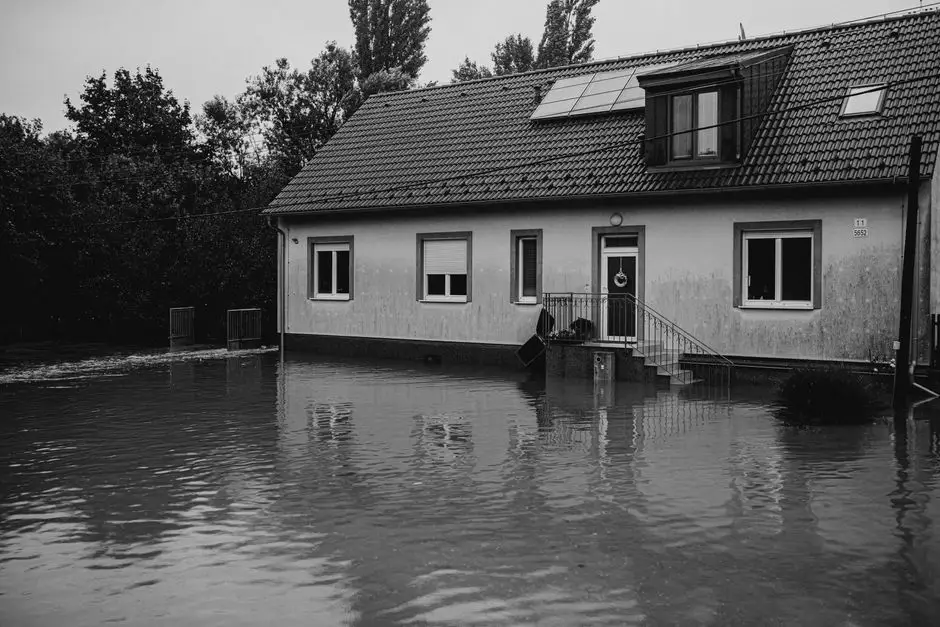
You cannot shut off the sky. What you can do is stop water from wicking under your doors and into your slab. Sandbags at the thresholds, towels rolled tight against the base of exterior doors, and moving everything off the floor buys you time. If the yard is holding 6 inches or more and creeping toward the house, that is a job for yard flood water removal Port Charlotte FL before it becomes an interior flood.
Toilet or drain backup
Stop flushing immediately and shut the angle stop behind the toilet. If multiple drains are backing up, the blockage is in the main line and no amount of plunging will fix it. Call a plumber - and keep everyone out of the affected bathroom until it is cleared, because that water is contaminated.
The first-hour emergency water damage checklist
This is the emergency water damage checklist Port Charlotte FL homeowners should run through before any crew arrives. Print it, stick it inside a kitchen cabinet, and you will not have to think when your hands are shaking.
- Shut off the water. Main valve or the closest angle stop to the leak.
- Kill power to every wet room at the breaker panel.
- Record a 30-second video of each affected room before you touch anything.
- Move furniture and electronics off the wet floor and onto blocks, counters, or dry carpet.
- Pull up loose rugs and area carpets so they are not sitting in a puddle.
- Prop up wet upholstery with aluminum foil or plastic wrap under the legs - wood stains transfer to wet carpet in hours.
- Open interior doors to keep air moving between rooms.
- Do not run your HVAC if the water may have reached the air handler or ducts.
- Call for extraction. Every hour of standing water roughly doubles the drying time.
If the water is in a finished lower level, the priority shifts to getting it out before it soaks into the slab and the wall base. That is a basement flood cleanup Port Charlotte FL job, and it needs commercial pumps - a wet/dry shop vac moves about 10 gallons before you have to empty it, which is nothing against 400 gallons of standing water.
Is it safe to stay in a flooded home in Port Charlotte FL?
Is it safe to stay in a flooded home in Port Charlotte FL? Usually yes for clean-water floods under an inch, and usually no for anything involving sewage, storm surge, or more than a couple of inches of standing water. The three things that send people out of the house are electricity, contamination, and air quality.
Electricity is the immediate risk. If water has reached any outlet, appliance, or the panel itself, the house is not safe until power is confirmed off. Contamination is the second. Toilet backups, storm surge, and any water that has crossed a garage floor or a yard carries bacteria and pathogens - that is category 3 water, and it requires protective gear to handle.
Air quality is the slow one. Port Charlotte sits at roughly 75 to 90 percent relative humidity most of the year. Wet drywall, insulation, and carpet in that climate start growing mold in 24 to 48 hours, and the spores go airborne. If anyone in the house has asthma or allergies, get them out until the structure is dry.
Rule of thumb: clean supply-line water, contained to one room, under an inch - you can stay. Anything else, or if you are not sure, leave and let a pro make the call.
Common mistakes we see after a flood
The same four mistakes show up on almost every flood call we run in Port Charlotte, and each one adds cost.
- Waiting to see if it dries on its own. It will not. In our humidity, wet drywall stays wet for weeks without mechanical drying, and by then the mold is behind the paint.
- Running a household fan and calling it drying. A box fan moves air. It does not remove moisture. You need refrigerant or desiccant dehumidifiers pulling 100-plus pints a day, plus air movers, to actually dry a structure.
- Throwing away wet carpet before the adjuster sees it. Document first. Photograph the water line on the pad, then remove. Otherwise you eat the replacement cost.
- Assuming the visible water is all of it. Water travels along joists, under baseboards, and into wall cavities. A moisture meter will find water 6 feet from where you see it. That hidden water is what causes the musty smell three weeks later.
One more: do not crank the thermostat to "dry it out faster." That raises the air's moisture capacity without removing any of it, and it can push humidity into unaffected rooms.
When to call a professional
Call a professional the moment water covers more than a few square feet, reaches any wall cavity, or involves anything other than clean supply-line water. Those three conditions are beyond what a shop vac and a box fan can handle.
You also want a crew on site if the water has been standing more than a couple of hours, if the flood came from outside the house, or if you can smell that musty, sour odor that means mold has already started. We handle structural drying services Port Charlotte FL with commercial dehumidifiers and air movers, and we monitor moisture readings daily until the structure hits dry standard - not until it looks dry.
We also serve the surrounding communities, and we see the same problems in older housing stock across the harbor. Homeowners dealing with Emergency Water Extraction in Punta Gorda call us for the same reason Port Charlotte residents do: the water has to come out today, not Monday.
Frequently Asked Questions
What should I do first when my house floods in Port Charlotte FL?
Shut off the water at the main valve, cut power to the wet rooms at the breaker, and call for extraction. Do those three things in that order within the first hour. Then document everything with video before you move a single item.
How do I stop water from flooding my home in Port Charlotte?
Find the source and shut the closest valve. For a burst pipe, that is the main shut-off or the angle stop under the fixture. For a water heater, it is the cold inlet on top of the tank. For storm water, sandbag the thresholds and get extraction on site before it spreads.
Should I call a water extraction company immediately in Port Charlotte?
Yes, if water covers more than a few square feet or has reached any wall. Mold starts in 24 to 48 hours in our humidity, and every hour of standing water roughly doubles the drying time. Call the same day, even at night.
Is it safe to stay in a flooded home in Port Charlotte FL?
For clean water under an inch in one room, usually yes. For sewage backups, storm surge, or more than 2 inches of standing water, no. Leave the house until power is confirmed off and the water is extracted.
How long does water extraction and drying take?
Extraction itself takes 2 to 6 hours for a typical room. Structural drying runs 3 to 5 days with commercial dehumidifiers and air movers, and we check moisture readings daily until the drywall, baseboards, and subfloor hit dry standard.
Get help with Emergency Water Extraction in Port Charlotte
If your home is taking on water right now, call us and we will be on the road. We extract the standing water, set the drying equipment, and monitor the structure until it is genuinely dry - not just dry to the touch.
Call 1111-0987-599 any hour of the day or night and we will get a crew to your door.